
Program notes
Archipiélagos (Archipelagos) was commissioned and written for virtuoso Venezuelan clarinetist Jorge Montilla. I've known Jorge for many years since he taught at the “Núcleo la Rinconada” in Caracas, where I was the music director and conductor over two decades ago. In 2008, my piece Wuaraira Repano, for solo clarinet and orchestra, was featured on a CD with him, conducted by maestro Alfredo Rugeles and the Simón Bolívar Symphony Orchestra — a very important landmark for my piece. It was a great opportunity to work with Jorge again. He then commissioned me to write for him a virtuosic piece for Eb clarinet and piano, which became Archipiélagos, although I only started and wrote the piece in 2011. The piece for Eb clarinet has four movements, all named after different archipelagos of Venezuela. I also made a flute and piano version in 2014, and later a saxophone and piano version.
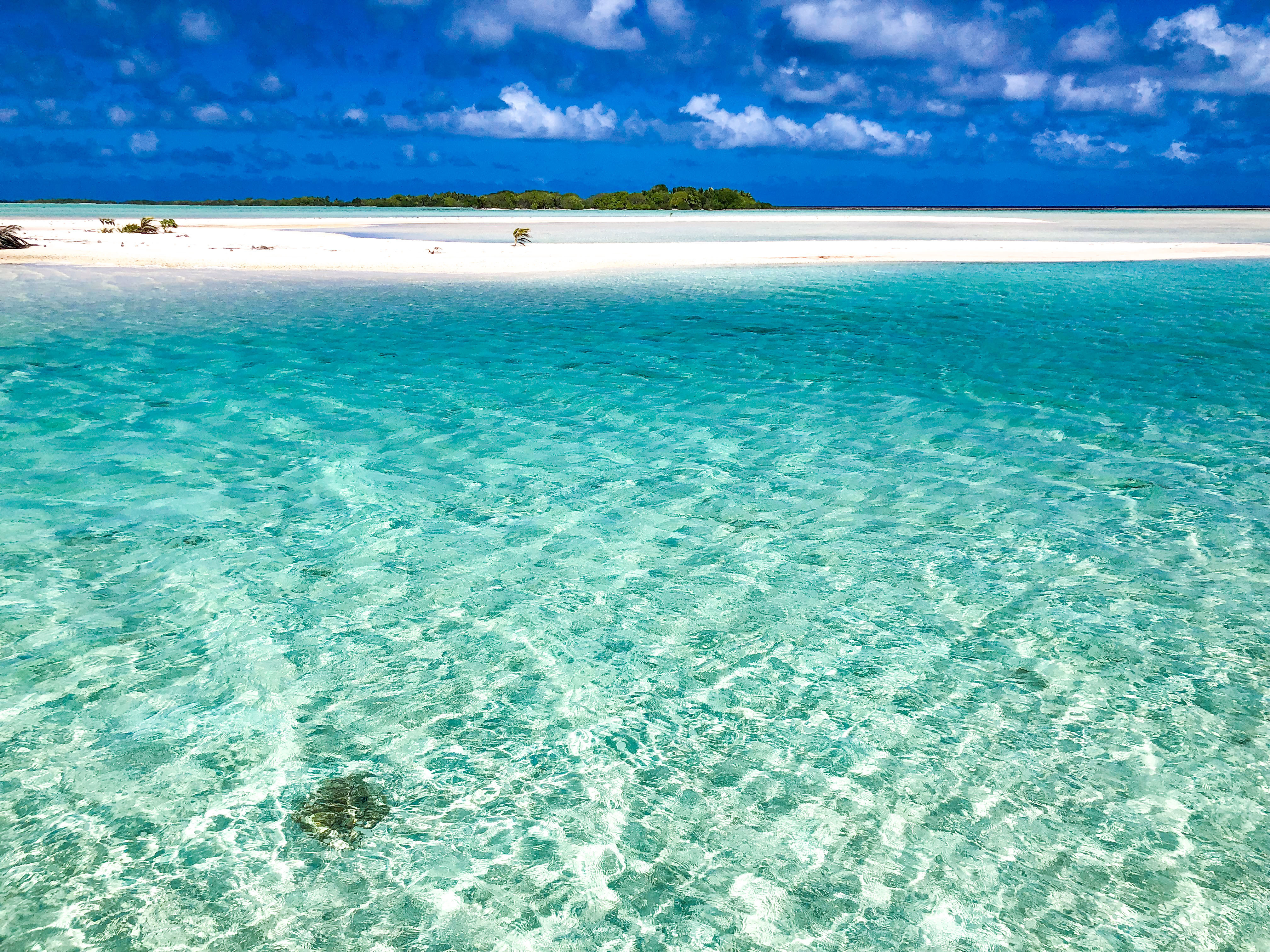
When writing this piece, I kept going back to my memories of all the beautiful shores and islands of Venezuela, which I visited as a child and young adult. At the same time, I could not ignore the socio-political anxiety that the whole country faces today. As I was writing this carefree and upbeat music, somehow the Venezuelan National Anthem started appearing as motivic material, as a symbol of what we could lose forever to invasive ideologies and powers. The national anthem quotations are very subtle, and unless you are Venezuelan, it would be very hard to notice them.
The first movement, Las Aves (“The Birds”), is one of the most important archipelagos of Venezuela, not only because of its ecological importance, but also for its strategic location in the Caribbean. As in many of these archipelagos, there are several keys and islands, and a wide variety of migrating birds. This first movement is divided into five shorter sections. The “A” section is a slow introduction, a “sunrise on the beach” kind of atmosphere. Then comes the “B” section featuring a piano solo, rather bare, but with a catchy rhythm leading to a clarinet/flute cadenza. After a short transition, the “A1” section comes back now with more vibrancy, and soon the piano shifts into a “motor” of perpetual motion while the clarinet/flute keeps getting more and more complex, until the material from the “B” section takes over, now in the piano, with the clarinet/flute singing above the “waves” of the piano.
The second movement, Los Frailes, is basically a rondo in five parts with a short codetta (A, B, A1, C, A2). Each time the refrain comes back, it is shorter, but it gains more character and drive. Section “B” is faster and very rhythmical, while “C” is more introverted and lyrical.
The third movement, Los Testigos y Los Monjes, juxtaposes two different archipelagos from opposite ends of the Caribbean Sea. Los Monjes are on the farthest western part, very close to Colombia, while Los Testigos are to the east, between Margarita Island and Trinidad. The first part of the movement, “Los Testigos,” is based on a somewhat calypso-like dance. A twelve-tone ostinato in the piano keeps repeating, and with each repetition, the texture grows and becomes more driven. This leads to a very subdued and introverted section depicting “Los Monjes,” which ends with a short quote of the Venezuelan anthem.
The last movement is called Los Roques, named after one of the most famous vacation destinations in Venezuela because of the many beautiful, hidden beaches within its small islands. This movement has three main sections: the first is more declamatory and energetic, the second more lyrical, and the last one builds towards a climatic ending, recalling the drive of the first movement.
— Efraín Amaya
Instrumentation, duration & versions
Instrumentation: Eb clarinet & orchestra · Eb clarinet & piano · flute & piano · saxophone & piano
Duration: ca. 20:00 · four movements
- Eb clarinet & orchestra — orchestrated & premiered in 2024.
- Eb clarinet & piano — original virtuosic version (2011).
- Flute & piano — version completed in 2014.
- Saxophone & piano — version completed in 2016, expanding the work’s reach to another instrument family. This version was dedicated to Dr. James Fusik.
Audio & video examples
Below are example performances of the different versions. Replace the placeholder video IDs for the flute and clarinet versions with your preferred YouTube recordings.
Eb clarinet & piano (YouTube performance):
Flute & piano (YouTube performance):
Saxophone & piano (YouTube performance):
Purchase options
The buttons below add items to your LaFi floating cart (top/right on desktop, bottom/right on mobile), so you can combine items before checkout.
To order any version without using PayPal, please email LaFi Publishers.